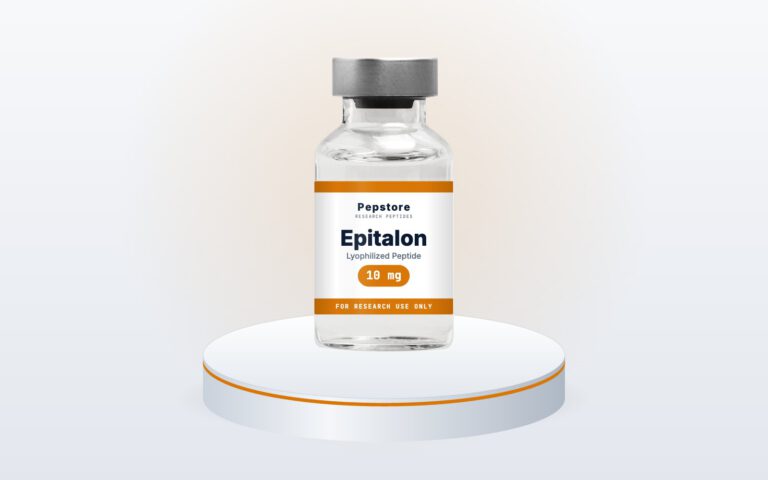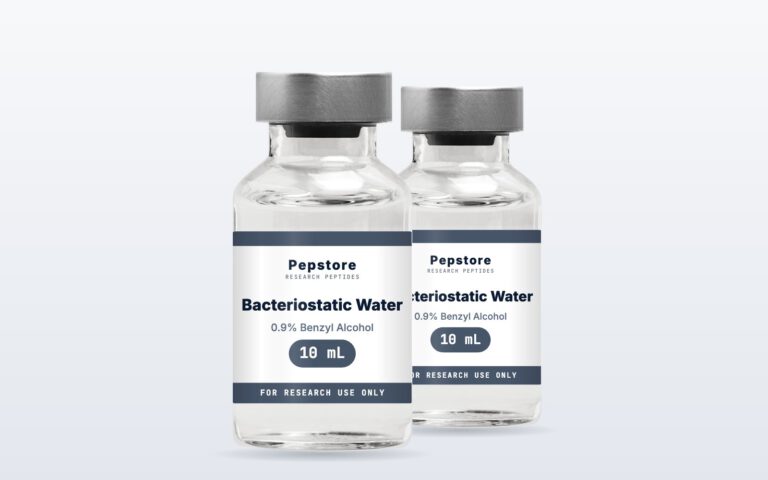

Lyophilized peptides are shipped as a freeze-dried cake to maximise stability. Reconstituting them carefully is the first step towards reproducible results in any in-vitro protocol.
Before you begin
Let the vial reach room temperature before opening to avoid condensation, and check that the lot number matches the Certificate of Analysis in our COA library.
What you need
- The peptide vial
- Bacteriostatic or sterile water, as your protocol requires
- A sterile syringe sized for the volume you will add
- Alcohol swabs and a clean work surface
Adding the diluent
- Wipe the rubber stopper of both vials with an alcohol swab and let it dry.
- Draw the planned volume of diluent.
- Insert the needle at an angle and let the liquid run slowly down the inside wall of the vial.
- Swirl gently until the cake has fully dissolved — never shake, as agitation can damage peptides.
Decide the concentration before adding any liquid. Our reconstitution calculator shows the volume, concentration and syringe units for your vial size.
Labelling and storage
Label the vial with the concentration and date. Keep reconstituted solutions refrigerated at 2–8°C, protected from light, and use them within the timeframe appropriate to your protocol.